The short answer
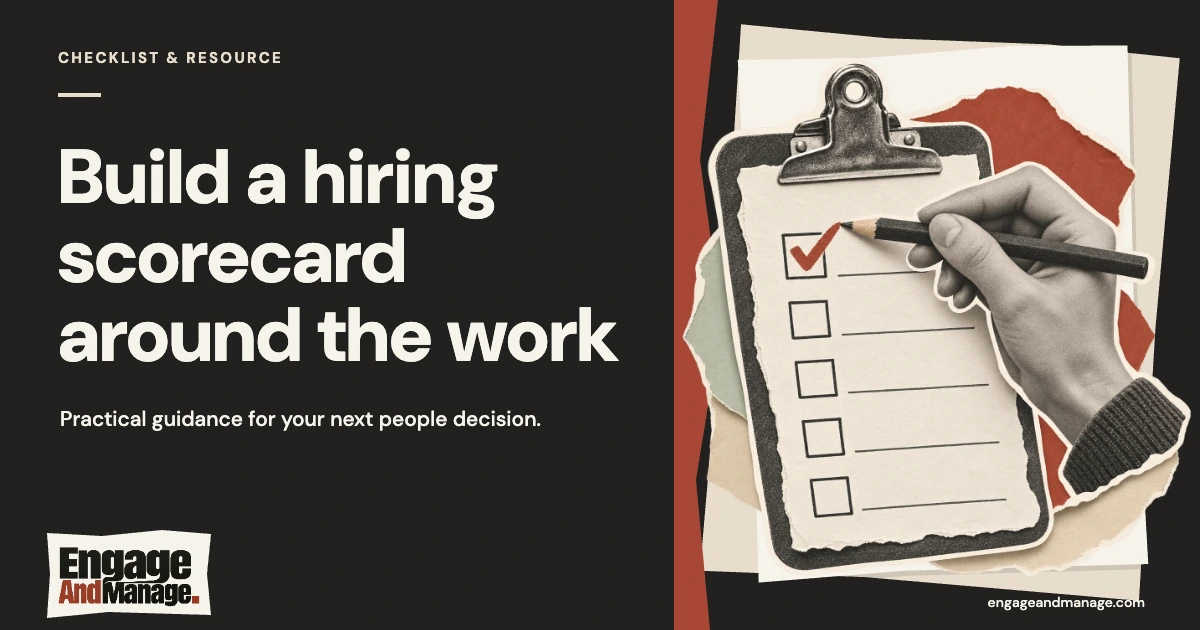
A hiring scorecard records the role requirements, evidence expected from the interview and the basis for the final decision. It helps interviewers assess candidates against the same work-related criteria. Define the criteria before interviews, and keep observations separate from interpretations such as “good fit” that do not explain the evidence.
1. Start with a clear purpose
Choose a small set of job-related criteria. Explain what strong evidence looks like without using vague ideas such as culture fit.
2. Make the work and ownership visible
Assign each interviewer a focus. Ask them to capture observations before the group discussion so the loudest voice does not become the default.
3. Agree the next action
Compare the evidence against the agreed criteria. Record open questions and resolve them consistently before a final decision.
Leave with a usable decision.
Write down the next action, who owns it and when you will check the result. Keep the decision where the people doing the work can find it.
A practical example
A role needs someone who can resolve a difficult customer handoff. The scorecard defines what evidence would show that capability, which interview exercise will examine it and how interviewers will record observations. During the debrief, a confident presentation is not treated as proof of the capability unless the relevant evidence supports that conclusion.
A working template you can adapt
| Part of the work | What to record or ask |
|---|---|
| Criterion | A responsibility or capability that matters to the role. |
| Assessment | The question, exercise or evidence used to examine it. |
| Observation | What the candidate actually said, did or demonstrated. |
| Judgment | How the evidence supports the decision and what remains uncertain. |
Questions to work through
Should every candidate use the same scorecard?
Use the same role-related criteria and a consistent assessment structure for candidates in the same process. Make any necessary adjustments through the appropriate process while preserving a fair basis for examining the required capability.
What is wrong with a “culture fit” score?
The phrase can conceal an unclear or subjective judgment. Describe the work-related behavior you need and the evidence used to assess it. A score should explain the requirement rather than reward similarity to the interviewer.
Connect this with the next decision
Keep moving.
Hiring
Run a calmer hiring debrief
Discuss evidence before preferences and leave with a clear next step.
Read the guide →
The software desk
Applicant tracking systems
Compare the workflow, scope and questions to ask each provider.
Read the guide →