The short answer
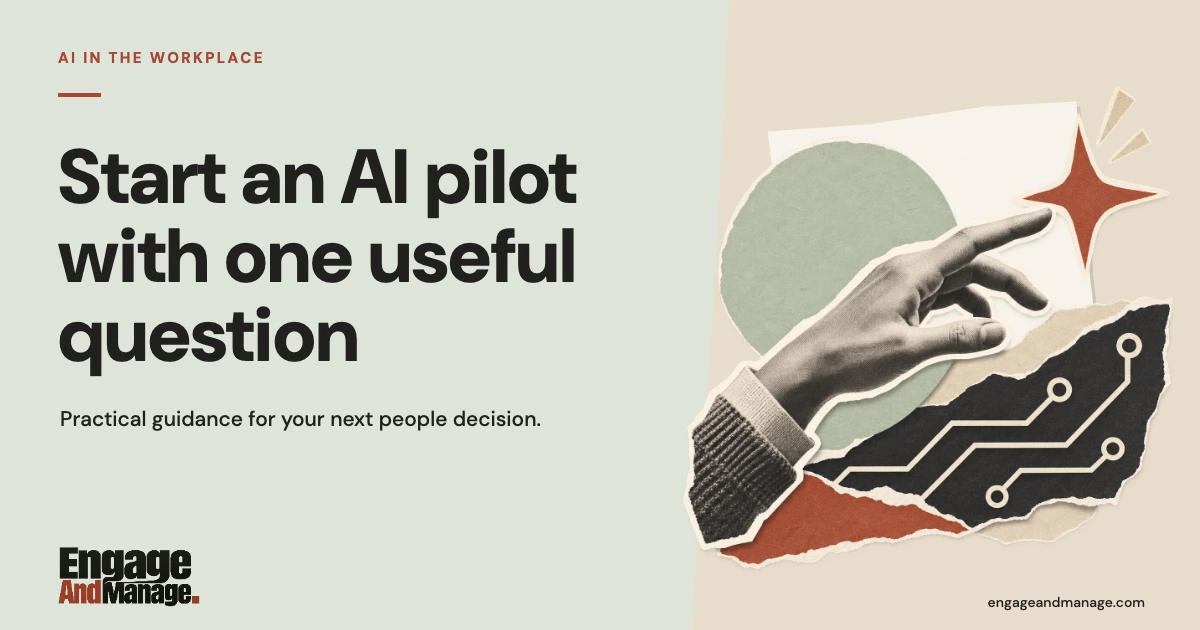
An AI pilot is a bounded test of one task, with a named owner, permitted information and a clear acceptance check. Define the current workflow before introducing a tool. Compare the result with an existing baseline and keep a human review step for outputs that influence people decisions.
1. Start with a clear purpose
Describe the task before choosing a tool. Record the inputs, the person using the output and what a good result looks like.
2. Make the work and ownership visible
Keep a person responsible for reviewing the output. Decide which information can enter the tool and when a task should return to a person.
3. Agree the next action
Run the pilot on a small, approved set of work. Compare quality and time with the existing process, then decide whether to expand.
Leave with a usable decision.
Write down the next action, who owns it and when you will check the result. Keep the decision where the people doing the work can find it.
A practical example
An HR team wants help drafting an internal policy summary. It chooses one approved document, excludes employee information and records the questions a useful summary must answer. A reviewer compares each generated draft with the source document, marks omissions and records the editing time. The pilot decision is based on accuracy and review effort, rather than on whether the draft sounds confident.
A working template you can adapt
| Part of the work | What to record or ask |
|---|---|
| Task | Summarize one approved document for a defined audience. |
| Information | Use only the sources approved for this test. |
| Review | Check every material claim against the source. |
| Decision | Continue only if quality and review effort meet the agreed threshold. |
Questions to work through
How large should an AI pilot be?
Keep the scope small enough to inspect the inputs, outputs and failure cases. One repeatable task is a useful starting point. Expand only after you understand the review work and have agreed who owns the next stage.
What should stop an AI pilot?
Pause when the tool needs information that has not been approved, produces errors the review process cannot reliably catch or creates more unresolved work than it removes. Record the reason and the conditions needed before another test.
Connect this with the next decision
Keep moving.
AI in the workplace
Give your team a clear AI handoff
Make it obvious when automation stops and human judgment begins.
Read the guide →
The software desk
HRIS
Compare the workflow, scope and questions to ask each provider.
Read the guide →