The short answer
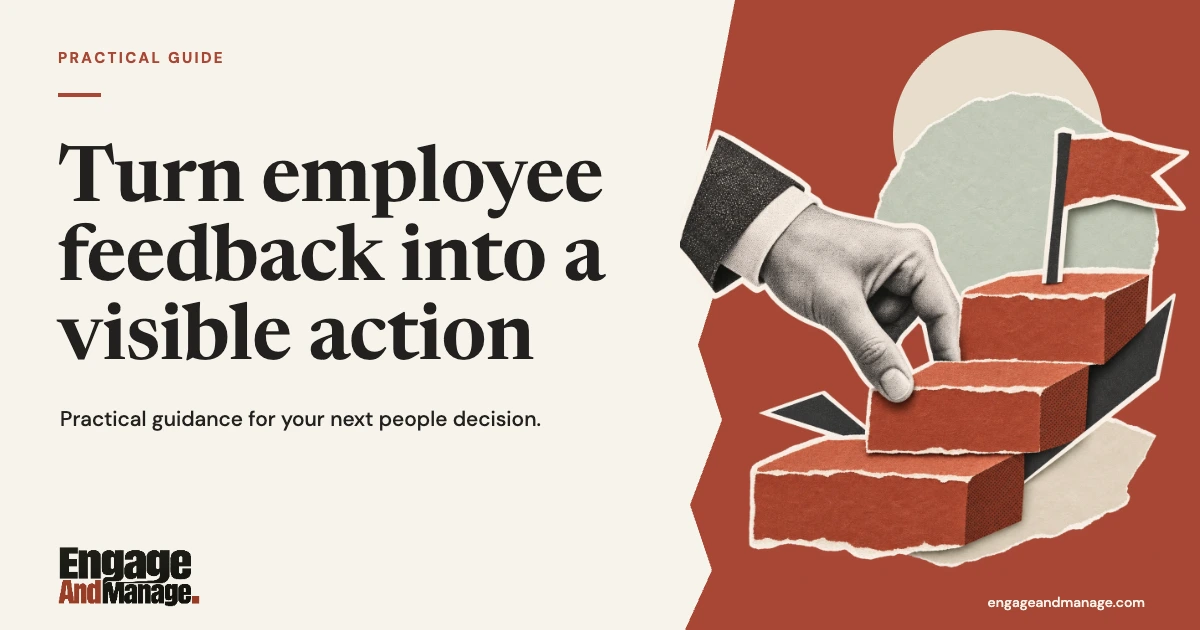
An employee feedback action plan explains what was heard, which issue will be addressed, who owns the response and when employees will hear an update. It also records what will not change and why. Start with one issue the team can act on rather than promising to fix every theme at once.
1. Start with a clear purpose
Choose a theme the team can influence. Describe the problem in plain language and check that your interpretation matches what people meant.
2. Make the work and ownership visible
Agree one action with an owner and a review date. Explain what will change and what cannot change yet.
3. Agree the next action
Report back even if progress is slow. Ask whether the action improved the experience before adding another survey.
Leave with a usable decision.
Write down the next action, who owns it and when you will check the result. Keep the decision where the people doing the work can find it.
A practical example
Employees report that priorities change without explanation. The team chooses a weekly decision update as its first action. The owner records which priority changed, the reason and the work that can stop. At the review date, employees are asked whether they can explain current priorities more easily. The action is judged by the experience it changes, not by the number of updates sent.
A working template you can adapt
| Part of the work | What to record or ask |
|---|---|
| Feedback theme | Describe the issue without exposing individual respondents. |
| Response | State the action and its intended effect. |
| Ownership | Name the person responsible and their next milestone. |
| Close the loop | Explain when employees will receive a progress update. |
Questions to work through
What if we cannot act on a feedback theme?
Explain the constraint and distinguish a decision not to act from an issue still being investigated. Tell employees what evidence would change the decision. Silence makes it difficult to know whether the feedback was understood.
How do we choose the first action?
Consider the importance of the issue, whether the team can influence it and the effort required to test a useful change. Involve the people affected in checking whether the proposed response addresses the actual problem.
Connect this with the next decision
Keep moving.

Employee retention
Ask better questions in a stay conversation
Make room for the practical details that affect someone’s experience.
Read the guide →
The software desk
Employee engagement software
Compare the workflow, scope and questions to ask each provider.
Read the guide →